Permanent Northbound pivot
jn26
Macau Business magazine l June 2026
Macau residents are venturing north not merely for dining and retail, but to explore rural farmsteads, commission bespoke goods, and scout commercial opportunities in Zhuhai and Hengqin. What once appeared to be a transient post-pandemic surge has matured into a structural shift—one that is proving to be far more permanent and consequential
Viviana Chan
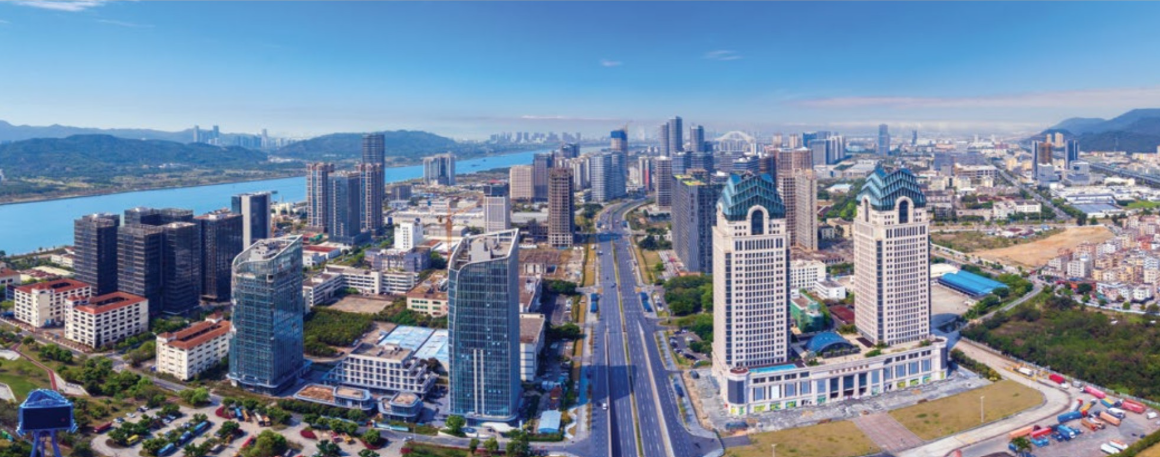
Macau residents have become a major engine of consumption growth in Zhuhai, with cross-border spending deepening well beyond the initial post-pandemic surge into a diverse, habitual pattern. This shift is reshaping commercial districts, influencing business investment decisions, and drawing policy responses from mainland authorities.
Restaurant operators, a Macau consumer, and a food and beverage consultant shared with Macau Business a structural shift: northbound spending is no longer a novelty but an ingrained lifestyle, and its economic footprint in Zhuhai — particularly in Hengqin and the Huafa commercial clusters — is growing.
The statistical picture is striking. A survey assessment report published for the first time by Zhuhai’s municipal statistics bureau in 2024 estimated that Macau and Hong Kong visitors enter Zhuhai an average of more than 360,000 times per month. Annual spending by these visitors in Zhuhai is projected at approximately RMB 5.5 billion (MOP 6.1 billion / USD 807 million).
While no updated data is yet available to quantify further growth, the increase in visitor volume is evident, particularly during holidays, when vehicles bearing Macau and Hong Kong licence plates are a common sight across the city.
The city’s appeal has also been recognised internationally. In February this year, a WeChat data report released during the Lunar New Year period listed Zhuhai among the most visited Chinese cities by overseas visitors — alongside Hong Kong, Shenzhen, Shanghai, Beijing, Macau, and Guangzhou. Mobile data from the period showed that the primary sources of inbound visitors were Hong Kong and Macau, pointing to the structural advantage of proximity and improving cross-boundary infrastructure.
“As a Portuguese investor, the most appealing aspect of Hengqin’s business climate is, without doubt, its strategic ecosystem specifically designed to serve as a platform between China and the Portuguese-speaking countries”
— Sofia Rebelo, Macau resident and F&B investor in Hengqin
Restaurants feel the shift
On the ground, restaurant operators say the change in customer composition is tangible, particularly at weekends.
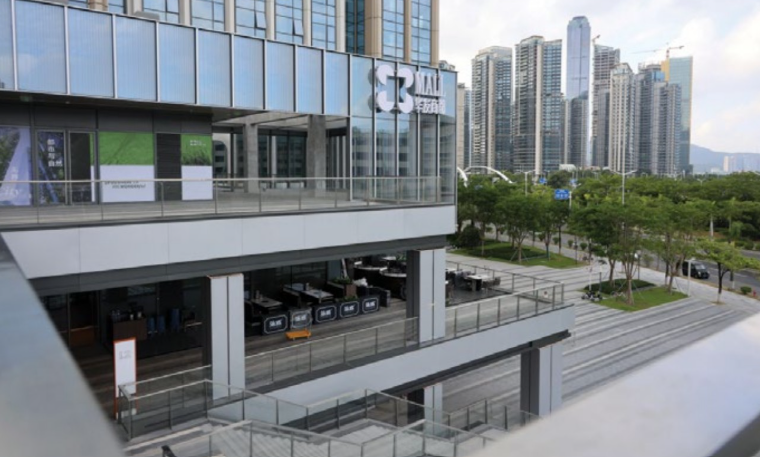
At an oyster hotpot restaurant in Hengqin Huafa Mall, a staff member told Macau Business that Macau customers now account for approximately 40 per cent of average daily spending on weekends, a proportion they attributed to the restaurant’s menu being well aligned with Macau tastes. The Macau clientele is varied, encompassing families, young couples, and regular diners.
At a third-floor restaurant in the same mall — one that offers views of the Macau Peninsula, the Sai Van Bridge, and the Macau Tower — the floor manager said Macau visitors are noticeably the majority at weekends. On weekdays, however, the customer base shifts towards white-collar workers, business travellers, and families based in or around Hengqin.
A Portuguese investor bets on Hengqin
The northbound consumption trend is also attracting investors from Macau’s international community. Sofia Rebelo, a Portuguese resident of Macau, opened Vivo, a Mediterranean-style restaurant at Hengqin Huafa Mall, drawn by what she describes as a business environment purpose-built to bridge China and the Portuguese-speaking world.
“As a Portuguese investor, the most appealing aspect of Hengqin’s business climate is, without doubt, its strategic ecosystem specifically designed to serve as a platform between China and the Portuguese-speaking countries,” she told Macau Business. She cited the single-checkpoint border arrangement, which allows near-frictionless movement of goods between Macau and Hengqin, and the zone’s “dual 15 per cent” tax regime — reduced personal and corporate income tax rates for qualified enterprises and talent, alongside tax exemptions on foreign investment income in priority sectors.
“At least 30 per cent of Macau residents have now made northbound spending a weekly habit… consumption has entered a deeper mode where people like to explore off the beaten track”
— Alex Mo, founder of Amazing Concept Brand Development
Strategic incentives and shifting habits
Rebelo also sees the habitual nature of northbound spending as central to her business case. “As a Macau resident, I observe the growing increase in consumption in China. With the facilitated border crossing for permanent residents — including foreigners — and cheaper products and rents, I increasingly feel that people have been developing the habit of consuming in China,” she said. Her ambition for Vivo is to become part of that established circuit: “What we aspire to is that people who habitually go on Sundays to eat traditional cozido in restaurants in Macau, or barbecues at Fernando’s in Hac Sa, will also start including Vivo and a stroll around Hengqin in their route.”
On the customer mix, Rebelo said the majority of Vivo’s diners come from Macau, given its proximity, followed by Hong Kong visitors who travel to Hengqin at weekends or are based on the island. Mainland Chinese customers remain the smallest group, she noted, as they are still getting acquainted with Mediterranean cuisine.
She assessed the practical support infrastructure — including MPay integration and Hengqin’s government-backed consumption voucher schemes — positively but with nuance.
“For a business like a restaurant, these initiatives translate into a very concrete and positive day-to-day impact. They resolve practical challenges and create real growth opportunities,” she said. The dual-currency payment model, she explained, simplifies transactions and aligns with customers’ familiar payment methods. However, she drew a distinction between facilitation and demand generation: “We do not feel that the vouchers or these facilities translate into an increase in business, but rather a facilitation at the point of payment — both for us, who only need one terminal, and for the customer.”
‘At least 30 per cent are now regular northbound spenders’
Alex Mo, a Macau food and beverage consultant and founder of Amazing Concept Brand Development (Macau) Limited, has observed the spending shift from both sides: as an industry advisor tracking the decline in Macau’s local foot traffic and as someone fielding growing interest from small operators considering investments in Zhuhai.
“At least 30 per cent of Macau residents have now made northbound spending a weekly habit,” he estimated. “Many of Macau’s residential neighbourhoods are much quieter in the evenings than before — whether it’s Iao Hon or Fai Chi Kei. A lot of restaurant operators are struggling to hold on.”
Mo traced the acceleration to approximately the last six months, though the roots go back to the post-pandemic reopening. “After the first wave rushed north, people spent a year adjusting. Now they’ve normalised it. They’re even ordering birthday cakes from up there. That has a real impact on small local businesses.”
“In the beginning there was more novelty — more things to eat and do. Now, what began as excitement-driven spending has settled into a more considered routine”
— Fong, Macau resident and consumer
Evolving consumption patterns drive investment
He identified value for money as the central driver. “The core logic is simple: why do we go north to spend? Price-to-quality ratio. If Macau had the same ratio, I wouldn’t go.”
Mo noted that the evolution of northbound spending has moved through identifiable stages. Early visitors gravitated toward major malls such as Huafa. Now, with familiarity established, Macau visitors are venturing further — to Beishan, Tangjiawan, and rural farmsteads — seeking more distinctive, lower-cost experiences. “Consumption has entered a deeper mode,” he said. “People like to explore off the beaten track.”
This evolution is influencing investment decisions. Mo said he is seeing increasing interest from small Macau operators — primarily in food and beverage — in setting up in Zhuhai, Hengqin, and Zhongshan, drawn by lower rents, comparable consumer habits, manageable distances, and the absence of a language barrier.
He cited one client who invested in a Hong Kong-style café in Zhongshan: monthly rent of approximately RMB 8,000(MOP 8,900 / USD 1,140), labour costs around RMB 35,000 (MOP 38,900 / USD 5,020), monthly revenue reaching approximately RMB 150,000 (MOP 166,500 / USD 21,500), and net profit margins in the range of 15 to 20 per cent — returns he said are comparable to, if not better than, running a similar business in Hong Kong or Macau.
Mo noted that while Zhuhai and Shenzhen are not immune to the broader consumption slowdown affecting mainland cities, the steady influx of Hong Kong and Macau visitors has helped sustain weekend foot traffic. “In Guangzhou, commercial spaces that used to have waiting lists are now easier to rent. But in Shenzhen and Zhuhai — places that Hong Kong and Macau people can easily reach — weekends are packed. That’s what’s driving people to want to set up business where the foot traffic is.”
From novelty to routine: a consumer’s perspective
Fong, a Macau resident who travels north to spend once or twice a month on average, described how her behaviour has evolved since the early days of the Hengqin opening. What began as excitement-driven spending — dining, entertainment, and exploration — has settled into a more considered routine.
“In the beginning there was more novelty — more things to eat and do. Even though the value for money was good, total spending was higher,” she said. With the recent appreciation of the renminbi, she has become more selective about discretionary purchases and now aims to keep monthly spending below MOP 1,000 (USD 124). She has also increased her use of online shopping platforms as an alternative.
Her choice of destinations has also matured. Rather than following familiar routes, she now consults online travel guides and visits a wider range of locations, with outings increasingly centred on activities for her children.
Fong also highlighted a practical development that has smoothed the cross-boundary experience: the integration of MPay — the Macau-based mobile payment platform — into the Greater Bay Area payment ecosystem. “Now you can pay directly with MPay in the Greater Bay Area. You don’t need to carry cash,” she said.
That observation aligns with a broader shift underway in Hengqin. The Guangdong–Macau Intensive Cooperation Zone previously rolled out a government-issued consumption voucher scheme delivered directly through overseas electronic wallets — including MPay and AlipayHK — without requiring a mainland app or bank account. The scheme distributed nearly RMB 10 million (USD 1.5 million) in vouchers across 11 weeks, signalling official intent to reduce the friction historically discouraging cross-boundary retail participation.
Commercial districts adapt to Macau tastes
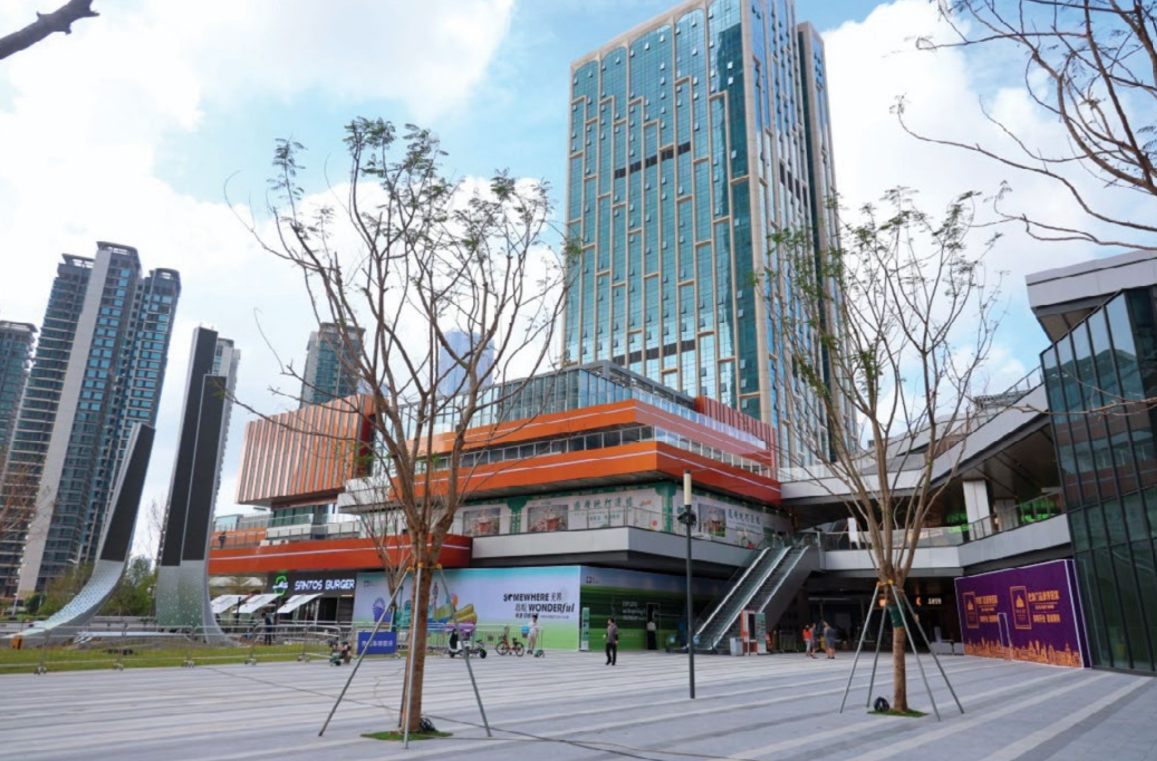
Beyond Hengqin, the Huafa Mall in Nanping, some 10 kilometres away, has also become a landmark destination for Macau and Hong Kong residents, offering a full ecosystem of retail, dining, leisure, and lifestyle services. Huafa Group, which is affiliated with the Zhuhai municipal government, has introduced targeted measures to attract Macau and Hong Kong visitors, including departure tax refunds and resident-exclusive discount schemes.
Its state-owned background is telling: the group’s active courtship of cross-border visitors reflects the Zhuhai government’s broader strategic interest in capturing northbound consumption from its neighbouring city.
Meanwhile, commercial districts across Zhuhai have expanded their offerings to match Macau and Hong Kong consumer preferences, with notable growth in international cuisine, Japanese dining, and concept food and beverage formats. The “hotpot cinema” concept — currently popular across mainland China — has arrived at Hengqin Huafa Mall, adding to the experiential retail draw.
The trend extends beyond consumption. A recent survey on employment mobility among Macau residents found that interest in working in the Greater Bay Area has risen significantly, with Zhuhai emerging as the preferred destination, followed by Shenzhen. The survey noted that familiar surroundings, attractive remuneration, and transport convenience remain the primary considerations for potential movers.
https://macaubusiness.com/permanent-pivot/
Comments
Post a Comment